نحن مسؤولون عن البناء-----نحن مسؤولون عن التصنيع-----نحن مسؤولون عن التدريب
هل تبحث عن شريك معدات صناعية موثوق به؟
حلول ثني مصممة خصيصًا لإنتاج الصفائح المعدنية الخاصة بك - دقة عالية، وسرعة تسليم، ودعم فني كامل.
راسلنا عبر البريد الإلكتروني
تواصل معنا

    يُرجى الانتظار ريثما يتم تقديم النموذج....

    تثقيب وثني CNC لعلب تخزين الطاقة وشحن المركبات الكهربائية

    BESS cabinets, battery enclosures and charger housings in 1.5–2.0 mm — flat enough to seal, fast enough to keep up with a product range that changes every quarter.

    2.0 mmCold-rolled at full bend length
    ±0.1 mmPunching accuracy
    MinutesChangeover between variants
    48 hGlobal on-site response

    What equipment does an energy storage or EV charger enclosure factory need?

    Energy storage and EV charging enclosures sit at the heavy end of the thin-sheet window. Cabinet bodies, doors and internal partitions are typically 1.5 to 2.0 mm cold-rolled or galvanised steel, because the enclosure carries weight, resists impact and has to seal to an IP rating. That thickness makes the frame choice non-negotiable: a cast-iron frame panel bender is rated to 2.0 mm cold-rolled at full bend length, a welded frame only to 1.5 mm.

    The other defining feature is change. Product generations in this sector turn over faster than in any traditional cabinet industry, and enclosure designs are revised while the first batch is still shipping. That rules out anything tool-dependent. A مكبس التثقيب البرج الدوّار CNC produces cable entries, ventilation patterns, fan cut-outs, busbar clearances and mounting arrays without dedicated dies; a ثني الألواح forms the four-sided panels from a program; both switch to a revised drawing in minutes rather than through a tooling order.

    STON CNC (Qingdao Ston Mechanical Technology Co., Ltd.) is a Chinese original manufacturer of CNC panel benders and turret punch presses, founded in 2006 in Qingdao, China. All equipment described here is built inside STON CNC's own 20,000㎡ factory, from casting and heat treatment through machining, assembly and inspection. Machines carry ISO 9001 quality certification and CE marking under Machinery Directive 2006/42/EC, and are exported to more than 80 countries. View certifications and patents →

    The parts we build for

    Cabinet, door and internal structure — the heavy thin sheet

    Battery and charger enclosures concentrate their sheet metal in a small number of large, thick-gauge panels that must stay flat enough for a gasket to seal against.

    BESS cabinet bodies1.5–2.0 mm, cast frame required
    Cabinet door leavesGasket channel flatness critical
    Internal partitionsFire and thermal separation
    Battery module traysFolded trays, not drawn shells
    Busbar covers and shroudsSmall parts, insulating clearances
    EV charger housingsCosmetic face plus service access
    Base and plinth framesLoad bearing, castor or foot mounts
    Ventilation and fan panelsLouvres plus fan cut-outs
    Where enclosure production goes wrong

    Three problems specific to battery and charger enclosures

    01

    An IP rating is decided by flatness, not by the gasket

    A door that bows by two millimetres will not seal, whatever gasket you specify, and the ingress test fails at the corners first. Closed-loop servo bending with rapid compensation adjustment holds angle across the full length, and straightness of roughly 0.2 mm/m keeps the sealing face straight enough for compression to be even along the whole channel.

    02

    The design changes faster than tooling can be ordered

    Cell formats, converter footprints and connector positions move between product generations. Any process that requires a dedicated die per hole pattern becomes a schedule risk. Turret punching and program-driven bending absorb a revised drawing in an afternoon; the constraint becomes engineering time, not tooling lead time.

    03

    2.0 mm is a real ceiling, not a soft one

    A cast-iron frame panel bender reaches 2.0 mm cold-rolled at full bend length; a welded frame stops at 1.5 mm. Enclosure specifications regularly drift to 2.5 or 3 mm for structural bases and outdoor cabinets. Those parts belong on a press brake, and we confirm which of your parts fall on each side before quoting.

    Recommended configuration

    Three ways to build the cell, by volume and product stability

    This sector rewards flexibility over raw throughput. Most customers are better served by a cell that absorbs design changes than by a line optimised for a product that may be superseded.

    Entry cell

    Pilot production and early product generations
    • Panel bender B+ (1600) or C (2000), cast-iron frame
    • Cold-rolled ≤2.0 mm at full bend length
    • Fiber laser blanking, no tooling required
    • Existing press brake retained for structural bases
    • Custom knives for gasket channel profiles
    Most enclosure manufacturers

    Volume cell

    Stable ranges in continuous production
    • SF series servo CNC turret punch press
    • Cable entries, ventilation, fan cut-outs and ribs in one clamping
    • Panel bender C (2000) or D (2500), cast-iron frame
    • Truss or robotic loading and stacking
    • Automatic tool change for switching between models
    • Press brake alongside for 2.5–3 mm structural parts

    Integrated line

    Standardised cabinet ranges at scale
    • Coil or sheet blanking with intelligent nesting
    • Punch-laser combined machine for mixed hole and contour work
    • Automatic bending with stacking and interleaving
    • Optional robot welding station for base frames
    • Unified control, process interlock, data traceability
    • Layout drawn against your existing building
    Before you go further

    What these machines can and cannot form

    The thickness row is where most enquiries in this sector fall over. Outdoor and structural enclosure parts drift above the panel bender window more often than customers expect.

    المعلمةPanel bender — cast framePanel bender — welded frameNotes
    Cold-rolled / galvanised≤2.0 mm≤1.5 mmAbove 2.0 mm goes to a press brake
    Stainless steel≤1.2 mm≤1.0 mmFor outdoor and coastal enclosures
    Aluminium≤2.5 mm≤2.5 mmAlloy dependent
    Max forming size1000 × 1000 up to 2800 × 1500 mmBy model
    Bending height5 mm minimum / 170, 300 or 400 mm maximumBy configuration
    Min four-sided inner sizeapprox. 140 × 190 mmBusbar shrouds may fall below this
    Angle accuracyapprox. ±0.5°/mDecides gasket compression evenness
    Straightnessapprox. 0.2 mm/mDecides whether the door seals
    Punching accuracy±0.1 mm on turret punch pressRepeatability approx. ±0.01–0.02 mm
    UtilitiesThree-phase 380 V, 0.6 MPa airConfigured to destination voltage

    Right fit

    Four-sided cabinet bodies, doors and partitions in 1.5–2.0 mm, with dense cut-out patterns that change between product generations. The combination of thick-gauge forming and tooling-free punching is exactly what this sector needs.

    Wrong fit

    Deep-drawn battery module shells, extruded heat sink profiles, roll-formed frame sections, and any structural part above 2.0 mm cold-rolled at full bend length. Different processes and in most cases different suppliers.

    Keep a press brake

    Structural bases in 2.5–3 mm, lifting lugs, heavy mounting brackets and thick reinforcement plates. Every enclosure factory we work with keeps a press brake for precisely these.

    Standards this equipment is built and guarded to

    Risk assessment follows EN ISO 12100; safety-related control functions such as light-curtain interruption and emergency stop are specified to EN ISO 13849-1. Hydraulic press brakes supplied into the EU are built against EN 12622. Machines placed on the EU market carry CE marking under Machinery Directive 2006/42/EC with the accompanying technical file. Quality management is certified to ISO 9001, and machined structural tolerances follow ISO 2768. For the finished enclosure, IEC 60529 defines the IP code your cabinet is tested against and IEC 61439-1 applies to low-voltage assemblies. Neither is a machine standard — but the flatness and angle consistency needed to pass an ingress test are established at the bending stage, not at final assembly.

    On the machines this means fully enclosed rear fencing, protective covers on all protruding moving parts, laser guarding that halts motion when the protected zone is broken, over-tonnage protection on turret punch presses, and grating-ruler offset-load detection on panel benders.

    Choosing the process

    Panel bender, press brake or roll forming?

    Enclosure ranges usually need the first two. The third supplies parts you will keep buying in.

     ثني الألواح باستخدام الحاسب الآلي الرقميمكبس الكبح CNCRoll forming
    Part geometryFlat panels folded on all four sidesAny bend line, any thickness in capacityConstant cross-section profiles
    Typical enclosure partsCabinet bodies, doors, partitions, traysStructural bases, lugs, heavy bracketsFrame members, mounting rails
    Thickness for this sector≤2.0 mm cold-rolled2.0 mm and aboveSet by the roll set
    Sealing-face straightnessapprox. 0.2 mm/mCrowning and operator dependentExcellent, but fixed section
    Response to a design revisionProgram change, minutesTool change and gauge resetNew roll set, weeks
    Operators1, or 0 with automatic loading1–21 per line
    Does STON supply it?YesYesNo — different process

    Battery module trays are worth checking early. A folded tray suits a panel bender; a drawn shell does not, and no amount of tooling will change that. We separate the two at drawing review.

    Process flow

    From sheet to a sealed, assembly-ready enclosure panel

    1. BlankingFiber laser or turret punch, no dedicated tooling
    2. PunchingCable entries, ventilation, fan cut-outs, ribs
    3. LoadingTruss or robot with vacuum pick-up
    4. BendingFour sides from one clamping, sealing face straight
    5. StackingAutomatic, no contact with coated faces
    6. WeldingOptional robot station for base frames
    What changes

    Manual bending versus a punch and bend cell

    Figures below describe the direction and mechanism of the change. Actual results depend on your part mix, batch size and shift pattern — we model them against your own drawings before quoting.

    ItemPress brakes onlyTurret punch plus panel bender cell
    Operators on a 2 mm cabinet panel2, lifting and turning1, or unattended with loading
    Door sealing-face straightnessCrowning and operator dependentapprox. 0.2 mm/m
    IP test failures at cornersCommon when angle drifts between panelsReduced by closed-loop angle control
    Response to a design revisionRe-tooling and re-provingProgram change, same day
    Cut-outs per panelLaser plus manual secondary operationsOne clamping on the turret punch
    Changeover between modelsTool swap and gauge resetProgram recall plus compensation adjustment
    Parts above 2.0 mmHandledStay on the press brake

    Payback logic we use with customers: (annual labour released + reduction in rework and scrap + additional saleable output) ÷ installed equipment cost. We build this with your real numbers rather than publishing a headline figure that would not match your plant.

    المعدات المستخدمة في هذا الحل

    STON machines used in energy storage and charger enclosure production

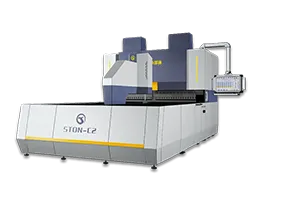
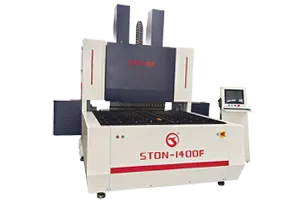
    STON CNC panel bender forming a 2 mm energy storage cabinet panel
    Forming

    CNC Panel Bender, cast frame

    Cast-iron frame models rated to 2.0 mm cold-rolled at full bend length. Full-electric servo closed-loop control, rapid compensation adjustment, grating-ruler offset-load detection, custom knives for gasket channel profiles.

    View press arm type →
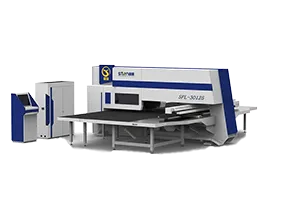
    STON SF series servo CNC turret punch press producing enclosure cut-outs
    Punching

    مكبس الثقب البرجي CNC بالسيرفو

    Cable entries, ventilation patterns, fan cut-outs, busbar clearances and mounting arrays in one clamping, without dedicated dies. ±0.1 mm accuracy, turret speed to 40 rpm, over-tonnage protection.

    View SF series →
    STON SFL punch laser combined machine for enclosure panels
    Punch + laser

    آلة SFL المدمجة للثقب والقطع بالليزر

    Repeating hole patterns and one-off contours on the same panel in a single clamping. Roughly 40% less floor space than separate machines, and no secondary alignment between the array and the cut-out.

    View SFL series →
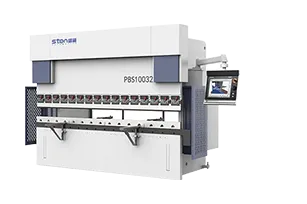
    STON PBS series electro-hydraulic servo press brake for thick enclosure parts
    Above 2 mm

    Electro-Hydraulic Servo Press Brake

    For structural bases, lifting lugs and reinforcement plates above the panel bender window. 63 t to 320 t, DELEM or ESA control, mechanical compensation, laser protection device.

    View PBS series →
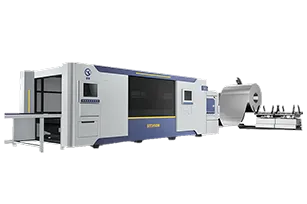
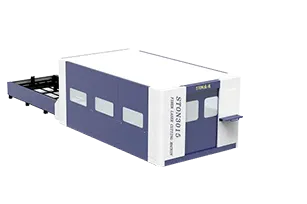
    STON double platform fiber laser cutting machine for enclosure blanking
    Blanking

    قطع بالليزر بمنصة مزدوجة

    Exchange-table fiber laser for prototypes, first articles and revised drawings that arrive faster than tooling can be ordered. Burr-free edges on coated and galvanised sheet.

    View laser unit →
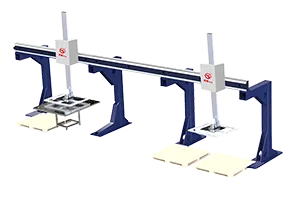
    STON truss and robotic loading system for enclosure panel handling
    Automation

    Truss and Robotic Loading

    Native interface on every panel bender, compatible with most robotic arm and gantry brands. On 2 mm panels the weight alone justifies removing the manual lift.

    View truss system →
    لماذا STON

    An original manufacturer, from casting to commissioning

    Founded in 2006 and headquartered in Qingdao, one hour from major export ports and the airport. Casting, heat treatment, machining, welding, assembly and inspection all happen inside our own 20,000㎡ factory. That is why a configuration change for a battery enclosure line does not become a six-month subcontracting problem.

    STON CNC 20,000 square metre manufacturing facility in Qingdao
    20,000㎡ facility, 300+ processing machines
    Precision assembly with plus minus 0.05 mm accuracy at STON CNC
    ±0.05 mm assembly accuracy
    CNC machining of high precision components at STON CNC
    In-house machining of every critical part
    Three coordinate measuring inspection station at STON CNC
    Three-coordinate inspection before shipment
    Tour the factory Open the 360° virtual tour
    After the machine lands

    Support that stays with the line

    Energy storage projects run to grid connection dates and charger rollouts run to site handover. A stopped cell delays an installation schedule, not just a production plan.

    1-hour response, 48-hour on siteGlobal service coverage across 80+ export countries.
    Free sample parts before you orderPre-sales engineers review drawings and validate feasibility, tooling and bend programs.
    Lifetime machine trackingUnique machine ID, free software upgrades, quarterly inspection and maintenance advice.
    7×24 expert technical supportRemote diagnostics plus on-site engineers when required.
    Operator and programmer trainingVideo tutorials, manuals and on-site sessions during commissioning.
    Dedicated spare parts inventoryConsumables and wear parts held for fast dispatch.
    VX
    Vicky Xu Head of Overseas Sales, STON CNC

    Ten years working with sheet-metal manufacturers across Europe, Southeast Asia, the Middle East and South America. Rather than quoting a machine from a catalogue, Vicky starts from your part drawings, material and thickness range and target output, then works with STON's engineering team to define the configuration — a single panel bender, a turret punch press, or a fully integrated cutting, punching and bending line with automated loading.

    Questions we get from enclosure manufacturers

    Frequently asked questions

    Can a panel bender form 2 mm cabinet panels?
    Yes, with a cast-iron frame. STON cast-frame panel benders are rated to 2.0 mm cold-rolled steel at full bend length; welded frames stop at 1.5 mm. If your structural bases or outdoor cabinets are specified at 2.5 or 3 mm, those parts belong on a press brake and we will identify them from your drawings before quoting rather than after delivery.
    Will the panels be flat enough to pass an IP ingress test?
    Flatness and angle consistency are what decide sealing, not the gasket. Straightness is approximately 0.2 mm per metre and angle accuracy approximately ±0.5° per metre, held by closed-loop servo control with rapid compensation adjustment. Grating-ruler offset-load detection monitors alignment during the bend. IEC 60529 testing applies to your finished enclosure; what the machine contributes is a sealing face straight enough for even gasket compression.
    Our enclosure design changes every product generation. Is that a problem?
    It is the reason to choose this process. Turret punching produces cable entries, ventilation and mounting patterns from a program using standard tooling, and panel bending switches to a revised drawing through program recall. Neither requires a dedicated die per pattern, so a design revision becomes engineering time rather than tooling lead time.
    Can you make battery module trays?
    Folded trays, yes — they are four-sided formed parts inside the thickness window. Deep-drawn module shells, no. Drawing is a press-tooling process that neither a panel bender nor a turret punch performs. If your tray drawing shows radiused corners formed in one operation rather than folded and welded, that part needs a different supplier and we will say so at drawing review.
    How much does an enclosure production cell cost?
    There is no list price, because the cell is configured to the part. Five factors move the figure most: frame type (cast iron is required for 2.0 mm at full bend length), forming length from 1600 mm to 2800 mm, punch specification (servo turret at 40 rpm versus mechanical, and the tooling package), automation level (manual load, truss loading, or a full cell with stacking), and scope — whether a laser and a press brake for thicker parts are included. A single bender and a full integrated line differ by roughly an order of magnitude. Send a cabinet drawing with your thickest part and we return a configured quotation within 24 hours.
    Do we need a turret punch as well as a bender?
    For this sector, usually yes. Enclosure panels carry cable entries, ventilation arrays, fan cut-outs, busbar clearances and mounting hole patterns. A turret punch completes all of them plus louvring and rib forming in one clamping. Running punching and bending together also means the bender is never waiting for blanks, which is where single-machine investments most often disappoint.
    هل يمكن للخلية العمل دون مراقبة؟
    Yes, with automatic loading and stacking. STON panel benders keep a native automatic loading and unloading interface and can be matched with most robotic arm and gantry brands, alongside STON's truss system and Bronte robotic arm. Fully enclosed fencing and laser guarding to EN ISO 13849-1 are specified at order stage for unattended running.
    ما هي إمدادات الطاقة والهواء المطلوبة؟
    تتطلب آلات ثني الألواح وآلات الطي طاقة ثلاثية الطور بجهد 380 فولت وهواء مضغوط بضغط 0.6 ميجا باسكال. أما مكابس الثقب الدوارة فتتطلب جهدًا يبلغ 380 فولت ±5% وهواء مضغوط بضغط 0.55 ميجا باسكال، مع استهلاك طاقة إجمالي يتراوح بين 3 و5 كيلوواط للطرازات المزودة بنظام سيرفو. تتطلب وحدات الليزر الليفي طاقة ثلاثية الطور بجهد 380 فولت، مع سعة إمداد موصى بها تعتمد على قوة الليزر. يتم ضبط الجهد والتردد وفقًا لبلد الوجهة قبل الشحن.
    هل يمكن توريد الآلات إلى تركيا أو المكسيك أو روسيا أو جنوب شرق آسيا؟
    نعم — فهذه الأسواق من بين الأسواق التصديرية الرئيسية لشركة STON CNC. يتم ضبط جهد التيار والتردد وفقًا لمتطلبات الوجهة قبل الشحن، ويمكن توطين لغة نظام التحكم الرقمي (CNC) وواجهة المستخدم (HMI)، كما تحمل الآلات علامة CE بموجب التوجيه 2006/42/EC عند الحاجة. يمكن تحديد أنظمة التحكم من FANUC وSiemens وRexroth إذا كانت شبكة الخدمة المحلية لديك تدعم أحدها بالفعل. تتم معالجة وثائق التصدير والتعبئة وتحميل الحاويات داخليًّا في تشينغداو، التي تبعد ساعة واحدة عن موانئ التصدير الرئيسية والمطار.
    كيف يتم التعامل مع قطع الغيار والصيانة خارج الصين؟
    تلتزم شركة STON CNC بالاستجابة في غضون ساعة واحدة وحل المشكلات في الموقع خلال 48 ساعة في جميع أسواق التصدير التي تزيد عن 80 سوقًا، مدعومة بدعم فني عن بُعد على مدار 7×24، ومستودع مخصص لقطع الغيار، وترقيات برمجية مجانية طوال عمر الماكينة. يتم تقديم عرض أسعار لمجموعة قطع الغيار الموصى بها مع الماكينة، بحيث تكون قطع الغيار المعرضة للتآكل الشائع متوفرة في مخزونكم الخاص بدلاً من شحنها جواً في منتصف نوبة العمل.
    هل تقدمون وثائق شهادة المطابقة (CE) للتصدير إلى أوروبا؟
    تحمل آلات STON شهادة CE، كما تحمل الشركة شهادة الجودة ISO. ويتم إعداد الوثائق الفنية الخاصة بتوجيه الآلات 2006/42/EC مع كل شحنة موجهة إلى الاتحاد الأوروبي، بما في ذلك تقييم المخاطر وفقًا للمعيار EN ISO 12100 ووظائف التحكم المتعلقة بالسلامة وفقًا للمعيار EN ISO 13849-1. يتم تحديد تكوين الحماية — الحماية من الليزر، والسياج المغلق بالكامل، والأغطية على الأجزاء المتحركة — في مرحلة الطلب بدلاً من إضافتها لاحقًا.
    كيف يمكننا التأكد من ذلك قبل الالتزام؟
    Send drawings for a full cabinet including your thickest part and your smallest busbar shroud — those two define the cell. Our pre-sales engineers review them, tell you which parts belong on a panel bender and which need a press brake, and provide free sample parts to validate feasibility before any order is placed.

    Specifications on this page verified against STON engineering documentation on 4 August 2026. Forming limits are confirmed against your own drawings before quotation. Published on 4 August 2026 · Last updated 4 August 2026 · Reviewed by Vicky Xu, Head of Overseas Sales.

    Next step

    Send us a cabinet drawing with your thickest part

    Two things decide the machine: your heaviest gauge and your largest panel. Send those and we come back within 24 hours with a configuration and a clear split between bender and press brake work.

    • Feasibility review by pre-sales engineers, not a sales rep
    • Free sample parts before you place an order
    • Line layout drawn against your actual floor plan
    • Configuration options at three output levels

    Prefer to talk first?
    WhatsApp: +86 18153226091
    البريد الإلكتروني: [email protected]

    احصل على اقتراح للتجهيز

    Send your requirements through our secure enquiry form. Our team will reply within 24 hours.

      احصل على اقتراح للتجهيز

      نرد خلال 24 ساعة. تُعامل رسوماتك بسرية تامة.

      يمكن إرفاق الرسومات في رسالة الرد الإلكترونية. نرد خلال 24 ساعة من الاثنين إلى السبت.

      يُرجى الانتظار ريثما يتم تقديم النموذج....

      احصل على عرض أسعار الآن

      أرسل لنا احتياجاتك - سنعاود الاتصال بك خلال 24 ساعة

      سواء أكنت تقوم بترقية خط إنتاج قائم أو تبدأ مشروعًا جديدًا، فإن STON ستخصص حلاً بنظام التحكم الرقمي للإنتاج الخاص بك.