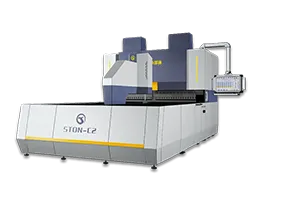
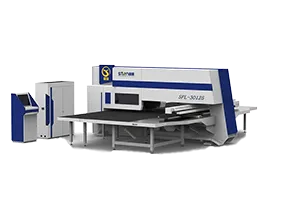
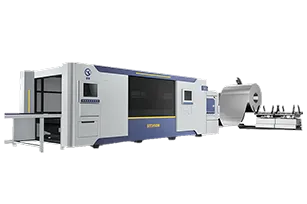
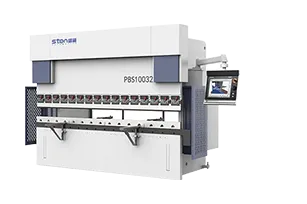
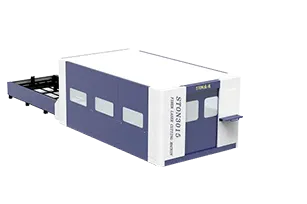
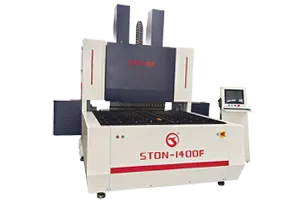
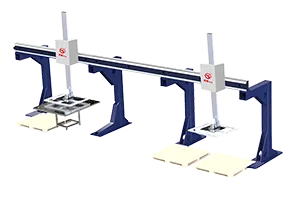
نحن مسؤولون عن البناء-----نحن مسؤولون عن التصنيع-----نحن مسؤولون عن التدريب
هل تبحث عن شريك معدات صناعية موثوق به؟
حلول ثني مصممة خصيصًا لإنتاج الصفائح المعدنية الخاصة بك - دقة عالية، وسرعة تسليم، ودعم فني كامل.
راسلنا عبر البريد الإلكتروني
تواصل معنا

    يُرجى الانتظار ريثما يتم تقديم النموذج....

    الثني الآلي لمصنعي خزائن الملفات وخزائن التخزين والأثاث المعدني

    Drawer fronts, door leaves and locker wraps in 0.5–1.0 mm pre-painted sheet — formed without a single manual lift, and without a scratch on the visible face.

    0.5 mmThinnest sheet formed reliably
    360°Patented rotating vacuum feeding
    5 mmMinimum bending height
    48 hGlobal on-site response

    What equipment does a filing cabinet or locker factory actually need?

    Metal furniture is the highest-volume, thinnest-gauge corner of sheet metal. A locker or filing cabinet is built from a small number of part types — drawer fronts, drawer boxes, door leaves, shelf panels, body wraps — each repeated thousands of times a month in 0.5 to 1.0 mm pre-painted or galvanised sheet. Because the part count per cabinet is low and the volume per part is enormous, the economics are decided by two things only: seconds per part و scrap caused by handling damage.

    That points at a specific machine set. Blanks come from a coil-fed line or a ليزر الألياف. Forming is done on a ثني الألواح باستخدام الحاسب الآلي الرقمي with vacuum pick-up, or on a flexible edge folding machine where the part needs dead edges, offsets or arc bends. Loading and unloading is automated from the start, not added later — on 0.6 mm painted sheet, every manual handling step is a scrap risk. A press brake stays for brackets and hardware mounts only.

    STON CNC (Qingdao Ston Mechanical Technology Co., Ltd.) is a Chinese original manufacturer of CNC panel benders and turret punch presses, founded in 2006 in Qingdao, China. All equipment described here is built inside STON CNC's own 20,000㎡ factory, from casting and heat treatment through machining, assembly and inspection. Machines carry ISO 9001 quality certification and CE marking under Machinery Directive 2006/42/EC, and are exported to more than 80 countries. View certifications and patents →

    The parts we build for

    The same six parts, ten thousand times a month

    Metal furniture production is the opposite of job-shop work: very few part types, very high repetition, very thin material, and a visible painted face that cannot be marked. That combination is exactly where automated panel bending pays back fastest.

    Drawer fronts0.6–0.8 mm, visible face, tight flatness
    Drawer boxesFour-sided forming, hemmed edges
    Door leavesUp to 2000 × 1500 mm, no waves
    Locker body wrapsLong single-piece wrap-around bends
    Shelf panelsRibbed for load, high repetition
    Back panels0.5 mm, thinnest part in the cabinet
    Top and base platesCut-outs plus four-sided flange
    Plinth and toe sectionsSmall parts, very high volume
    Where metal furniture production leaks margin

    Three problems every locker factory recognises

    01

    Thin painted sheet marks at every touch

    A 0.6 mm pre-painted drawer front picks up a scratch from a glove, a bench edge or a back gauge. Rework means stripping and repainting, which costs more than the part. Vacuum pick-up with a patented 360° rotating suction feeder moves the blank without touching the visible face at all.

    02

    Thin gauge fights back

    Below 0.8 mm, springback and edge waviness turn into visible defects on a flat door face. Closed-loop servo bending with rapid compensation adjustment holds the angle across the full length instead of relying on an operator to shim and retry.

    03

    Volume turns seconds into money

    When one part runs 20,000 times a month, two seconds of cycle time is a shift per month. Press-brake pacing is operator-limited; a panel bender folds all four sides from one clamping, and with automatic loading it keeps running through breaks and shift changes.

    Recommended configuration

    Three ways to build the cell, by monthly volume

    Metal furniture is the one industry where we push customers towards automation earlier than they expect. At locker volumes, a manual-load machine becomes the bottleneck within a year.

    Entry cell

    Moving off press brakes, up to ~5,000 parts/month
    • Suction cup panel bender, A (1000) or B (1400)
    • Welded frame, CRS ≤1.5 mm / SS ≤1.0 mm
    • Manual loading, one operator
    • Custom pressure and folding knives for drawer profiles
    • Footprint from 4.3 × 1.6 m
    Most furniture factories

    Standard cell

    Mixed locker and cabinet ranges, 5,000–30,000 parts/month
    • Panel bender B+ (1600) or C (2000), cast-iron frame
    • Flexible edge folding machine for dead edges and offsets
    • Truss or robotic loading with vacuum grippers
    • Automatic stacking, no operator contact with the painted face
    • Auxiliary upper and lower blades for local small bends
    • Automatic tool change for switching between drawer sizes

    Coil-fed line

    Standardised ranges, continuous output
    • Uncoiling and levelling, coil ≤10 T, 200–1500 mm wide
    • Levelling accuracy ±1 mm/m² for flat door faces
    • Fiber laser or turret punch blanking
    • Panel bending with automatic stacking
    • Optional robot welding station for drawer boxes
    • Unified control, process interlock, data traceability
    Before you go further

    What these machines can and cannot form

    Metal furniture sits comfortably inside the forming window — the risk here is not thickness, it is part size at the small end. Drawer components and plinth sections often sit close to the minimum forming dimension, which is the first thing our engineers check on your drawings.

    المعلمةPanel benderFlexible edge folding machineNotes
    Typical furniture gauge0.5–1.0 mm0.5–1.0 mmWell inside capacity
    Cold-rolled steel max≤1.5 mm welded / ≤2.0 mm castAt full bending length
    Stainless steel max≤1.0 mm welded / ≤1.2 mm castFor stainless furniture ranges
    Max forming size1000 × 1000 to 2800 × 1500 mm1200 × 1200 to 2000 × 1500 mmBy model
    Min four-sided inner sizeapprox. 140 × 190 mm200 × 200 mmCheck small drawer parts here
    Minimum bending height5 mm4 mmBelow this, press brake or custom tooling
    Max bending height170 / 300 / 400 mm100 mmBy configuration
    Special processesPositive and negative bending, 0–180°Arc, dead edge, offsetHemmed drawer edges use dead edge
    Angle accuracyapprox. ±0.5°/mapprox. ±0.5°/mStraightness approx. 0.2 mm/m
    UtilitiesThree-phase 380 V, 0.6 MPa airConfigured to destination voltage

    Right fit

    Four-sided folded panels in 0.5–1.0 mm repeated at high volume, with a visible painted or coated face that must stay unmarked. This is the strongest case for automated panel bending anywhere in sheet metal.

    Wrong fit

    Roll-formed shelving uprights and rack posts, deep-drawn parts, wire products, and any drawer component whose four-sided inner size falls below the minimum forming dimension.

    Keep a press brake

    Hardware mounts, lock reinforcement plates, hinge brackets and prototype runs. One press brake alongside an automated cell covers everything the bender should not be set up for.

    Standards this equipment is built and guarded to

    Risk assessment follows EN ISO 12100; safety-related control functions such as light-curtain interruption and emergency stop are specified to EN ISO 13849-1. Hydraulic press brakes supplied into the EU are built against EN 12622. Machines placed on the EU market carry CE marking under Machinery Directive 2006/42/EC with the accompanying technical file. Quality management is certified to ISO 9001, and machined structural tolerances follow ISO 2768. For the finished furniture, most export markets reference EN 16121 for non-domestic storage furniture (strength, durability and stability) — the forming tolerances and joint consistency your product needs to pass it are set at the bending stage.

    On the machines this means fully enclosed rear fencing, protective covers on all protruding moving parts, laser guarding that halts motion when the protected zone is broken, over-tonnage protection on turret punch presses, and grating-ruler offset-load detection on panel benders.

    Choosing the process

    Panel bender, folding machine or press brake?

    Metal furniture factories usually need two of these three. The split is decided by whether the part needs a hemmed or arc edge, and by how small the part is.

     ثني الألواح باستخدام الحاسب الآلي الرقميFlexible edge folding machineمكبس الكبح CNC
    Best forFour-sided boxes and drawersPanels needing dead edge, arc or offsetBrackets, hardware, prototypes
    Typical furniture partsDrawer boxes, door leaves, body wrapsHemmed drawer fronts, curved shelf edgesLock plates, hinge mounts
    Max bending height170 / 300 / 400 mm100 mmTool-dependent
    Min four-sided inner sizeapprox. 140 × 190 mm200 × 200 mmNo practical limit
    Handling of painted faceVacuum pick-up, no contactSuction feeding, no contactManual, contact at every step
    Operators1, or 0 with automatic loading1, or 0 with automatic loading1–2
    Economic batchMedium to very high volumeMedium to very high volumeOne-off to medium
    Does STON supply it?YesYesYes

    If your range uses roll-formed shelving uprights or wire drawer runners, those come from a different process and a different supplier — we will tell you that at the drawing-review stage rather than after the order.

    Process flow

    From coil or sheet to a stacked, paint-ready panel

    1. BlankingCoil uncoiling and levelling, or fiber laser
    2. PunchingLock holes, vent slots, shelf slots, ribs
    3. LoadingVacuum pick-up, 360° rotating feeder
    4. BendingFour sides formed from one clamping
    5. Edge workDead edge, offset or arc on the folding machine
    6. StackingAutomatic, no contact with the visible face
    What changes

    Manual bending versus an automated furniture cell

    Figures below describe the direction and mechanism of the change. Actual results depend on your part mix, batch size and shift pattern — we model them against your own drawings before quoting.

    ItemPress brakes onlyPanel bender cell with vacuum loading
    Operators at the bending station2 per machine on door leaves1, or unattended with automatic loading
    Handling per four-sided part4 lifts and rotations1 vacuum pick, machine does the rest
    Bend cycleOperator-paced0.2 s per bend, 5,000+ bends per day (STON published figures)
    Scratch and dent scrap on painted sheetRisk at every manual touchNo contact with the visible face
    Angle consistency across 10,000 partsDrifts with operator and shiftClosed-loop servo, ±0.5°/m
    Changeover between drawer sizesTool swap and gauge resetProgram recall plus rapid compensation adjustment
    Night shiftRequires full crewRuns unattended with automatic loading and stacking

    Payback logic we use with customers: (annual labour released + reduction in rework and scrap + additional saleable output) ÷ installed equipment cost. We build this with your real numbers rather than publishing a headline figure that would not match your plant.

    المعدات المستخدمة في هذا الحل

    STON machines used in filing cabinet and locker production

    STON suction cup type CNC panel bender forming a thin gauge metal furniture panel
    Forming

    آلة ثني الألواح المزودة بكؤوس شفط

    Vacuum-gripped feeding designed for thin, coated sheet. Patented 360° rotating suction pick-up, full-electric servo closed-loop control, cast or welded frames, cabinet air conditioning for constant-temperature electrics.

    View suction cup type →
    STON flexible edge folding machine with automatic loading and unloading
    Edge work

    آلة طي الحواف المرنة

    Arc, dead edge and offset bending up to 2000 × 1500 mm, minimum bending height 4 mm. Up to 25 concurrent servo axes, 42CrMo forged blank holder, fully enclosed safety fencing.

    View folding machine →
    STON SF series servo CNC turret punch press for locker and cabinet panels
    Punching

    مكبس الثقب البرجي CNC بالسيرفو

    Lock holes, ventilation slots, shelf-pitch slotting and stiffening ribs in one clamping. Brush and steel-ball composite table protects coated surfaces; ±0.1 mm accuracy, turret speed to 40 rpm.

    View SF series →
    STON uncoiling levelling and laser blanking line for metal furniture production
    Blanking

    Coil-to-Part Production Line

    Uncoiling, levelling and laser blanking under one control system. Levelling accuracy ±1 mm/m² keeps 0.6 mm door faces flat, coil width 200–1500 mm, coil weight ≤10 T.

    View production line →
    STON double platform fiber laser cutting machine for furniture panel blanking
    Cutting

    قطع بالليزر بمنصة مزدوجة

    Exchange-table fiber laser so the next sheet loads while the current one cuts. Burr-free edges matter on furniture parts that are handled by end users, not just assemblers.

    View laser unit →
    STON truss and robotic loading unloading system for panel benders
    Automation

    Truss and Robotic Loading

    Native interface on every panel bender, compatible with most robotic arm and gantry brands. Removes the two-person lift on locker door leaves and lets the cell run through breaks.

    View truss system →
    لماذا STON

    An original manufacturer, from casting to commissioning

    Founded in 2006 and headquartered in Qingdao, one hour from major export ports and the airport. Casting, heat treatment, machining, welding, assembly and inspection all happen inside our own 20,000㎡ factory. That is why a configuration change for a locker or drawer line does not become a six-month subcontracting problem.

    STON CNC 20,000 square metre manufacturing facility in Qingdao
    20,000㎡ facility, 300+ processing machines
    Precision assembly with plus minus 0.05 mm accuracy at STON CNC
    ±0.05 mm assembly accuracy
    Large annealing furnace used for stress relief of machine frames
    Annealing for long-term frame stability
    Three coordinate measuring inspection station at STON CNC
    Three-coordinate inspection before shipment
    Tour the factory Open the 360° virtual tour
    After the machine lands

    Support that stays with the line

    Furniture production runs to retail delivery windows and container bookings. A stopped bending cell stops the paint line behind it, so response time matters more than any single number on the datasheet.

    1-hour response, 48-hour on siteGlobal service coverage across 80+ export countries.
    Free sample parts before you orderPre-sales engineers review drawings and validate feasibility, tooling and bend programs.
    Lifetime machine trackingUnique machine ID, free software upgrades, quarterly inspection and maintenance advice.
    7×24 expert technical supportRemote diagnostics plus on-site engineers when required.
    Operator and programmer trainingVideo tutorials, manuals and on-site sessions during commissioning.
    Dedicated spare parts inventoryConsumables and wear parts held for fast dispatch.
    VX
    Vicky Xu Head of Overseas Sales, STON CNC

    Ten years working with sheet-metal manufacturers across Europe, Southeast Asia, the Middle East and South America. Rather than quoting a machine from a catalogue, Vicky starts from your part drawings, material and thickness range and target output, then works with STON's engineering team to define the configuration — a single panel bender, a turret punch press, or a fully integrated cutting, punching and bending line with automated loading.

    Questions we get from metal furniture factories

    Frequently asked questions

    Can a panel bender handle 0.5 mm sheet without marking or distorting it?
    Yes — thin coated sheet is one of the main reasons furniture factories move to a panel bender. The blank is picked up by vacuum and never dragged across a bench or a back gauge, and the patented 360° rotating suction feeder rotates the part in the air rather than on a surface. Closed-loop servo control with rapid compensation adjustment holds the angle on gauges where a press brake would rely on operator shimming.
    What is the smallest drawer or plinth part a panel bender can form?
    The minimum inner dimension for four-sided forming is approximately 140 × 190 mm on a panel bender, and 200 × 200 mm on a flexible edge folding machine. Minimum bending height is 5 mm and 4 mm respectively. Small plinth and toe sections frequently sit near this line — send those drawings first, because they decide whether the whole part family fits one machine or needs a small-part customisation with modified clamping and tooling.
    Can it produce hemmed or dead edges on drawer fronts?
    Yes, on a flexible edge folding machine, which performs arc bending, dead edge (hemming) and offset in addition to positive and negative bending. Many furniture factories run a panel bender for the boxes and a folding machine for the visible hemmed fronts. Which parts go where is decided during drawing review.
    How much faster is this than the press brakes we run now?
    STON publishes a bending speed of 0.2 seconds per bend, stated as three to four times faster than a press brake, with more than 5,000 bends per day per machine. For metal furniture the more important number is usually labour and scrap: a door leaf that needs two operators on a press brake is handled by one on a panel bender, or by none with automatic loading, and handling scrap on painted sheet largely disappears.
    How much does a locker and filing cabinet bending cell cost?
    There is no list price, because the cell is configured to the part family. Five factors move the figure most: frame type (welded costs less than cast iron but is limited to 1.5 mm cold-rolled rather than 2.0 mm), forming length from 1000 mm to 2800 mm, automation level (manual load, truss loading or a full robotic cell with stacking), the tooling package including custom drawer knives and auxiliary blades, and scope — a single bender, a bender plus folding machine, or a coil-fed line. A single manual-load machine and a coil-to-part line differ by roughly an order of magnitude. Send your part drawings and monthly volume and we return a configured quotation within 24 hours, with the alternatives priced alongside.
    Panel bender, folding machine or press brake — which do we need?
    Panel bender for four-sided boxes and drawer bodies. Flexible edge folding machine for panels needing dead edges, arcs or offsets, and for very long single-piece wraps. Press brake for brackets, hardware plates and prototypes. Roll forming for shelving uprights and rack posts — a different process that STON does not supply, and one you will keep buying in. Most furniture factories end up with a bender plus a folding machine, and one press brake for the rest.
    Can the cell run unattended on a night shift?
    Yes, with automatic loading and stacking. STON panel benders keep a native automatic loading and unloading interface and can be matched with most robotic arm and gantry brands on the market, alongside STON's own truss system and Bronte robotic arm. Fully enclosed rear fencing and laser guarding are specified at order stage for unattended running.
    ما هي إمدادات الطاقة والهواء المطلوبة؟
    Panel benders and folding machines require three-phase 380 V power and 0.6 MPa compressed air. Turret punch presses require 380 V ±5% and 0.55 MPa air, with combined power consumption around 3–5 kW for servo models. Voltage and frequency are configured for the destination country before shipment.
    هل يمكن توريد الآلات إلى تركيا أو المكسيك أو روسيا أو جنوب شرق آسيا؟
    Yes — these are among STON CNC's main export markets. Supply voltage and frequency are configured to the destination before shipment, CNC and HMI language can be localised, and machines carry CE marking under Directive 2006/42/EC where required. Export documentation, packing and container loading are handled in-house in Qingdao, one hour from major export ports and the airport.
    كيف يتم التعامل مع قطع الغيار والصيانة خارج الصين؟
    تلتزم شركة STON CNC بالاستجابة في غضون ساعة واحدة وحل المشكلات في الموقع خلال 48 ساعة في جميع أسواق التصدير التي تزيد عن 80 سوقًا، مدعومة بدعم فني عن بُعد على مدار 7×24، ومستودع مخصص لقطع الغيار، وترقيات برمجية مجانية طوال عمر الماكينة. يتم تقديم عرض أسعار لمجموعة قطع الغيار الموصى بها مع الماكينة، بحيث تكون قطع الغيار المعرضة للتآكل الشائع متوفرة في مخزونكم الخاص بدلاً من شحنها جواً في منتصف نوبة العمل.
    هل تقدمون وثائق شهادة المطابقة (CE) للتصدير إلى أوروبا؟
    STON machines are CE certified and the company holds ISO quality certification. Technical documentation for the Machinery Directive is prepared with each EU shipment, and safety configuration — laser guarding, fully enclosed rear fencing, protective covers on moving parts — is specified at order stage.
    How do we confirm our parts can be made before committing?
    Send part drawings with material, thickness and monthly volume, and include your smallest drawer component. Our pre-sales engineers review the drawings and provide free sample parts to validate feasibility, optimise the bend program and tooling, and shorten ramp-up after installation.

    Specifications on this page verified against STON engineering documentation on 4 August 2026. Forming limits are confirmed against your own drawings before quotation. Published on 4 August 2026 · Last updated 4 August 2026 · Reviewed by Vicky Xu, Head of Overseas Sales.

    Next step

    Send us your drawer and door drawings

    We will come back within 24 hours with a machine recommendation, a bend-sequence check on your smallest part, and an honest answer on whether the whole family fits one cell.

    • Feasibility review by pre-sales engineers, not a sales rep
    • Free sample parts before you place an order
    • Line layout drawn against your actual floor plan
    • Configuration options at three output levels

    Prefer to talk first?
    WhatsApp: +86 18153226091
    البريد الإلكتروني: [email protected]

    احصل على اقتراح للتجهيز

    Send your requirements through our secure enquiry form. Our team will reply within 24 hours.

    اطلب عرض أسعار مخصصاً
    Drawings can be attached in the reply email. We respond Monday to Saturday.

    احصل على عرض أسعار الآن

    أرسل لنا احتياجاتك - سنعاود الاتصال بك خلال 24 ساعة

    سواء أكنت تقوم بترقية خط إنتاج قائم أو تبدأ مشروعًا جديدًا، فإن STON ستخصص حلاً بنظام التحكم الرقمي للإنتاج الخاص بك.